A Jug of Wine and the Fleeting Hour: The "Rubaiyat" of Omar Khayyam
In one breath
Omar Khayyam's Rubaiyat, made famous in English by Edward FitzGerald, is a short book of four-line poems haunted by mortality. Behind its wine and roses lies a scientist's sober reckoning: life is brief, the great questions meet silence, and the present hour is what we truly have.
On this page
Omar Khayyam was an eleventh-century Persian polymath, a brilliant mathematician and astronomer who reformed the calendar and advanced algebra. But the world remembers him for a handful of short, four-line poems, the rubaiyat, collected and made famous in English by Edward FitzGerald’s celebrated nineteenth-century translation. The Rubaiyat is brief, sensuous, and haunted by mortality. Beneath its images of wine, roses, and the beloved runs a steady, sober awareness that life is short, the universe is silent, and this passing moment is all we can be sure of. It is a scientist’s clear-eyed reckoning with death, wrapped in some of the most beautiful verse ever written.
Here is what the Rubaiyat taught me about seizing the present, about the silence of the great questions, and about finding sweetness in a fleeting world.
Key takeaways
- Seize the present; the past is gone and the future is uncertain, so this hour is what we have.
- Mortality is the constant backdrop, giving every pleasure its poignancy.
- The great questions meet silence; Khayyam doubts that we can know the ultimate answers.
- Wine and the rose are symbols of the sweetness available in a transient life.
- Humility before mystery replaces dogmatic certainty about what lies beyond.
Drink, for you know not whence you came
The most insistent note in the Rubaiyat is the call to live now. Again and again Khayyam turns from the unanswerable questions of origin and destiny to the cup in his hand and the moment before him. Ah, make the most of what we yet may spend, one quatrain urges, before we too into the dust descend. This is the ancient theme the Romans called carpe diem, but in Khayyam it carries a particular gravity, because it comes from a man who clearly understood, as a scientist, just how small and brief a human life is against the vastness of time. The wine he raises is a toast to the present precisely because he sees so clearly that the present is all we hold.
The silence behind the questions
What gives the Rubaiyat its depth is its honesty about what we do not know. Khayyam poses the largest questions, where we came from, where we go, what it all means, and repeatedly confesses that he has found no answer, that the door he knocked on stayed shut, that the wisest who argued about it returned to dust as ignorant as they set out. This is not cynicism but a deep intellectual humility. Having pushed reason as far as it would go, he arrives at a frank admission of mystery. I find this strangely consoling. In an age loud with certainties, religious and scientific alike, Khayyam’s willingness to say “I do not know, and neither do you” feels like a rare honesty.
Sweetness in a passing world
Some readers take the wine of the Rubaiyat literally and some read it, in the Sufi manner, as a symbol of divine intoxication. I suspect Khayyam intended the ambiguity. Either way, the poems are not a counsel of despair but of a sober, grateful savouring. If the world is fleeting and the answers hidden, then the response is neither to numb ourselves nor to postpone living until we have solved the unsolvable, but to taste fully the real goods that are actually here, a cup of wine, a rose, a friend, a morning. There is a tenderness in this, a love for the small sweet things of a life we cannot keep.
What I’m taking with me
The Rubaiyat is the kind of book to keep by the bedside and open at random. What I am taking from it is its particular blend of clear sight and warm heart: a refusal to pretend I know the answers to the ultimate questions, paired with a determination not to let that uncertainty poison the present. Khayyam, the great mathematician, measured the heavens and concluded that the wisest response to our brief, mysterious lives was to drink deeply of the passing hour, with gratitude and without illusion. I think he was on to something.
Frequently asked questions
What is the Rubaiyat of Omar Khayyam about?
It is a collection of short four-line Persian poems reflecting on the brevity of life, the certainty of death, the limits of knowledge, and the importance of savoring the present moment.
Who was Omar Khayyam?
An eleventh-century Persian mathematician, astronomer, and poet, famous in mathematics for his work on algebra and in literature for the quatrains gathered in the Rubaiyat.
Does the wine in the Rubaiyat mean alcohol or something spiritual?
Both readings exist. Some take it literally as a celebration of earthly pleasure, while others read it, in the Sufi tradition, as a symbol of divine intoxication. The ambiguity is part of the poem’s richness.
References & further reading
- Khayyam, Omar. The Rubaiyat of Omar Khayyam. (Translated by Edward FitzGerald, 1859; or Peter Avery and John Heath-Stubbs, Penguin, 1979.)
- Dashti, Ali. In Search of Omar Khayyam. Allen & Unwin, 1971.
- Arberry, A. J. Classical Persian Literature. Allen & Unwin, 1958.
Watch: others on this book

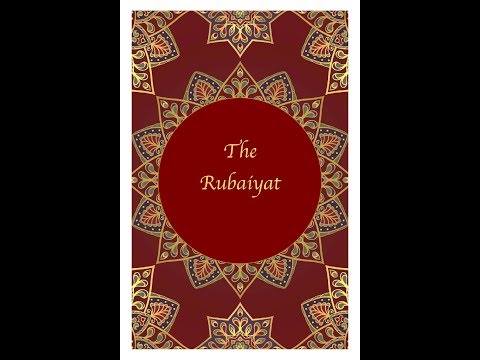
Read along with me
Book notes, philosophy and the ideas that shape how we build. New essays every month, no spam.
Related reading notes
The Journey to the Self: Attar's "The Conference of the Birds"
Attar's The Conference of the Birds: the birds' excuses, the seven valleys of the spiritual path and the Simurgh pun that reveals the divine within.
The Lover's Religion: Reflections on the Poetry of Rumi
There is a reason Rumi, a thirteenth-century Persian mystic and jurist, is one of the best-selling poets in the modern world.
Facing the End: Tolstoy's "The Death of Ivan Ilyich" and a Life Well Lived
Tolstoy's The Death of Ivan Ilyich: a respectable life revealed as hollow, the lie of denying death, and the question of whether we lived rightly.
Comments
No comments yet. Start the conversation.