When Reason Turns Against Itself: "Dialectic of Enlightenment"
In one breath
Written in exile during World War II, Adorno and Horkheimer's Dialectic of Enlightenment asks how reason and progress led to fascism and mass deception. Enlightenment reason became instrumental, focused on control rather than values, the domination of nature turned into domination of people and the culture industry pacifies through standardized entertainment.
On this page
Dialectic of Enlightenment, written by Theodor Adorno and Max Horkheimer during the Second World War, is one of the darkest and most challenging books of the Frankfurt School of critical theory. Its authors, German Jewish intellectuals who had fled Nazism, were grappling with an agonising question: how could the Enlightenment, the great European project of reason, science, and progress meant to liberate humanity from superstition and tyranny, have led, in the twentieth century, to fascism, total war, industrialised genocide, and the mass deception of modern culture? Their unsettling answer is that this was no mere betrayal of Enlightenment ideals, but a tendency contained within Enlightenment reason itself. It is a difficult, pessimistic, and profound book.
Here is what Dialectic of Enlightenment taught me about reason turning against itself, about the “culture industry,” and about the dark side of progress.
Key takeaways
- Enlightenment reason aimed to liberate but contained a drive to dominate.
- Reason became “instrumental,” concerned with means and control, not ends or values.
- The domination of nature turned into the domination of human beings.
- The “culture industry” produces standardized entertainment that pacifies and controls.
- Progress has a dark side; rationality alone does not guarantee a humane world.
Reason against itself
The “dialectic” of the title refers to the way Enlightenment reason turns into its opposite. The Enlightenment set out to free human beings by replacing myth and superstition with reason and science, by teaching us to master nature through knowledge. But Adorno and Horkheimer argue that this very project carried within it a will to domination. Reason became increasingly “instrumental”, concerned only with calculating the most efficient means to achieve given ends, while losing the capacity to reflect on whether those ends were good. Reason that can only calculate, that asks “how?” but never “why?”, becomes a tool that can serve any master, including the most monstrous. The same rational efficiency that built hospitals built death camps. This is the terrible insight: that a reason reduced to mere instrument is morally empty, and can be turned to barbarism as easily as to liberation.
From dominating nature to dominating people
The authors trace how the Enlightenment project of dominating nature, bending the natural world to human purposes through science and technology, slid into the domination of human beings as well. The same mindset that treats nature as raw material to be controlled and exploited comes to treat people the same way, as objects to be managed, manipulated, and used. The drive to master everything, once unleashed, does not stop at nature; it turns on humanity itself, and on the inner nature of the individual, demanding that we repress and discipline ourselves to fit the rational, productive order. In this analysis, the totalitarian state and the administered society are not failures of Enlightenment reason but, in a dark way, extensions of its logic of total control. It is a bleak vision, and one can resist its sweeping pessimism, but it names something real about how the will to dominate can corrupt even our noblest projects.
The culture industry
The book’s most famous and influential concept is the “culture industry.” Adorno and Horkheimer argue that under modern capitalism, culture, film, music, popular entertainment, has become an industry, mass-producing standardised products designed not to enlighten or challenge but to pacify, distract, and sell. Far from being the realm of free creativity and critical reflection, modern mass culture, they claim, manufactures conformity: it gives people endless, formulaic amusement that keeps them passive, content, and incapable of imagining anything different. The culture industry promises escape and delivers sedation, reconciling people to a world that ought to be questioned. This analysis can feel elitist, and it underrates the genuine value and complexity of popular art, a fair criticism. But its core warning, that entertainment can function as a tool of pacification, that “fun” can be a form of control, feels piercingly relevant in our own age of algorithmic distraction.
What I’m taking with me
Dialectic of Enlightenment is a difficult and deeply pessimistic book, and I read it as a dark warning rather than a complete truth. What I am taking from Adorno and Horkheimer is their unsettling insight that reason reduced to a mere instrument becomes morally empty and can serve barbarism; their analysis of how the drive to dominate nature can turn into the domination of human beings; and their concept of the culture industry, the way mass entertainment can pacify rather than liberate. I resist their sweeping despair, reason and progress have also done immense good. But they force me to ask the hard question: is my reason serving good ends, or just efficient means? And is my “entertainment” waking me up, or putting me to sleep?
Frequently asked questions
What is Dialectic of Enlightenment about?
It is a work of critical theory by Adorno and Horkheimer arguing that Enlightenment reason, meant to liberate humanity, contained a drive to domination that helped lead to fascism, total war, and a pacifying mass culture.
What is “instrumental reason”?
Reason concerned only with calculating efficient means to given ends, without reflecting on whether those ends are good. Adorno and Horkheimer argue this kind of reason is morally empty and can serve any purpose, including barbarism.
What is the “culture industry”?
Their term for the mass production of standardized entertainment under capitalism, which they argue pacifies and manipulates people, manufacturing conformity rather than fostering genuine creativity or critical thought.
References & further reading
- Adorno, Theodor W., and Max Horkheimer. Dialectic of Enlightenment. (1944/1947; translated by John Cumming, Herder & Herder, 1972.)
- Jay, Martin. The Dialectical Imagination. Little, Brown, 1973.
- Held, David. Introduction to Critical Theory. University of California Press, 1980.
Watch: others on this book


Read along with me
Book notes, philosophy and the ideas that shape how we build. New essays every month, no spam.
Related reading notes
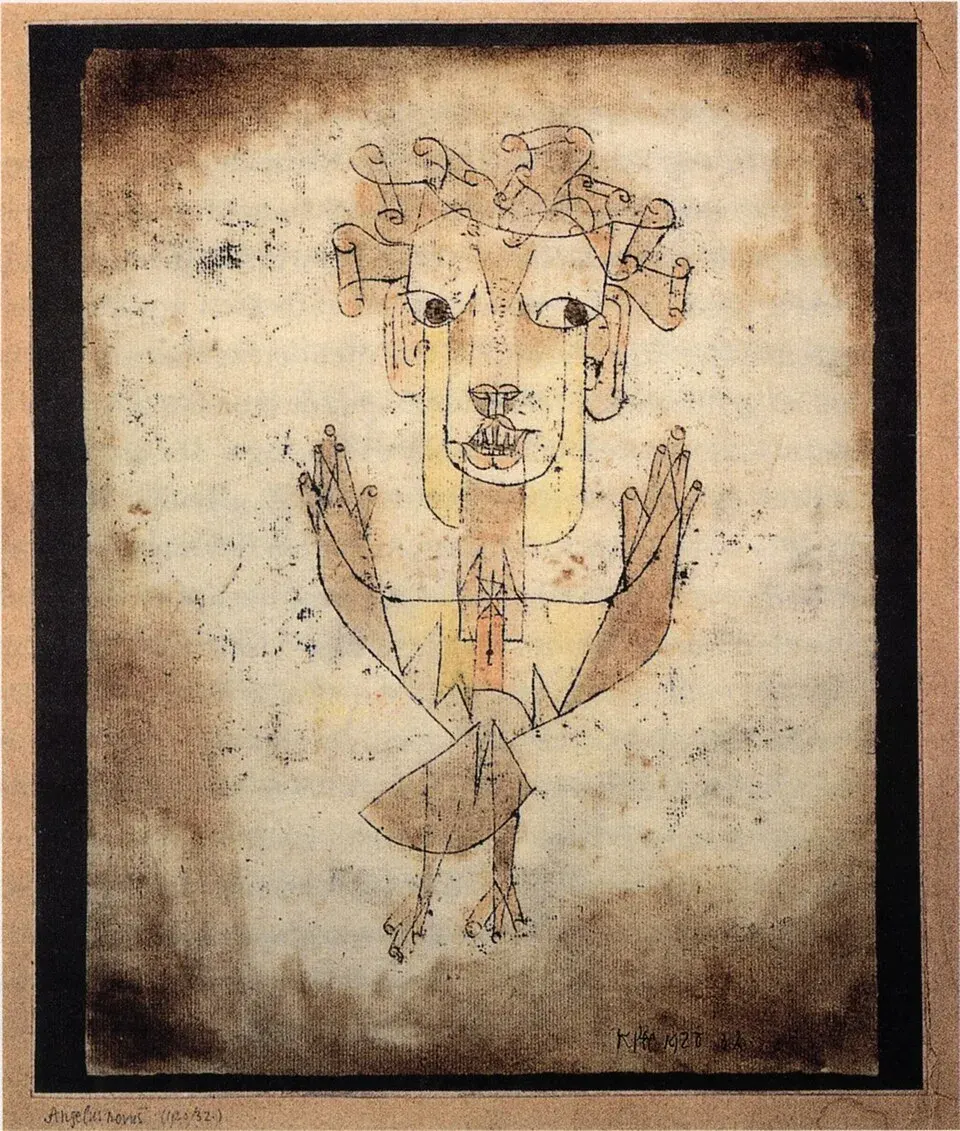
The Aura and the Angel of History: Walter Benjamin's "Illuminations"
Walter Benjamin's Illuminations: the aura of art lost to mechanical reproduction, the Angel of History and his critique of progress.
The Comfortable Unfreedom: Marcuse's "One-Dimensional Man"
Marcuse's One-Dimensional Man: false needs, how affluence pacifies dissent and why comfortable unfreedom can feel like freedom.
The Ideology We Don't See: Žižek's "The Sublime Object of Ideology"
Žižek's The Sublime Object of Ideology: why ideology lives in actions, not beliefs, why cynical distance doesn't free us and how hard it is to step outside.
Comments
No comments yet. Start the conversation.