Using AI to Scale a Consulting Practice
AI did not replace me. It replaced the version of me that spent half the week on work no client was ever paying for.

TL;DR
For independent consultants, income is capped by the hours in a week. AI broke that ceiling not by doing the job but by drafting the first 70 percent of many tasks: research, proposals and documents. Judgment stays human, verification discipline keeps it safe, and pricing must shift from hours to outcomes.
On this page
For years my consulting practice ran on a number I could not change: the hours in my week. I could raise my rate, but slowly. I could hire, but then I would be running a firm instead of doing the work I was good at. So I did what most independent consultants do - I worked more hours, called it ambition, and quietly accepted that the practice could only ever be as big as my calendar.
AI broke that ceiling, but not in the way the hype promised. It did not do my job. It did something more useful: it did the first 70 percent of dozens of tasks that were eating my week and producing nothing a client would ever pay for. The proposal nobody sees the drafting of. The research summary. The blank page before every report. The email triage, the meeting recap, the search through old folders for a deliverable I knew I had made before. None of that was the work. All of it was the cost of doing the work.
Production is not the same as judgment
The mental model that made AI actually useful was learning to separate two things I had always done together: production and discernment.
Production is the typing, drafting, summarizing, restructuring, and formatting. It is most of the visible effort and almost none of the actual value. Discernment is knowing which option fits this client, which claim is true, which recommendation I can stand behind. It is a small fraction of the time and the entire reason anyone hires me.
AI is extraordinary at production and genuinely bad at discernment. Once I saw that line clearly, the strategy wrote itself. Hand AI the production. Keep the discernment. A report could be 70 percent machine-drafted and still be entirely mine, because the 30 percent that made it correct, defensible, and specific to that client was the part I was being paid for in the first place.
Where the hours actually came back
The biggest gains were not in delivery, where I expected them. They were in the parts of the business I had always neglected because I was too busy delivering.
The funnel was the first surprise. I had a personal brand the way most consultants do - in theory. AI turned one recorded talk into a week of content in my own voice, after I made it study my best writing and learn how I actually sound. Lead research that used to be an excuse to procrastinate became a five-minute brief. Proposals went from a lost weekend to a two-hour review of a draft I had not written from scratch.
The back office was the quieter revolution. I pointed AI at years of past deliverables and could finally ask my own archive questions - how did I approach this last time, reuse that framework, find that precedent. Every working prompt became a saved procedure. The know-how that had lived only in my head started living in systems that would outlast my memory.
The discipline that makes it safe
None of this is free of risk, and the risks are exactly the ones that can end a consulting practice.
The first is confidentiality. AI tools can leak what clients tell you in an instant. I treat every input as if it might be retained forever, anonymize what I can, and read the contract before I paste. One careless paste can breach an NDA I signed years ago.
The second is quality. AI’s defining flaw is fluent confidence - it is wrong in complete, plausible sentences. So nothing reaches a client without passing a gate I never skip: every fact verified, every citation real, every recommendation one I can personally defend. The deliverable carries my name, not the model’s.
The third is the subtlest: commoditization. The same AI I use is available to my competitors and to my clients. If my offer were just “I run prompts,” I would have no reason to exist. So I stopped letting AI be the value and let it be the cost structure. The value moved up to the things AI cannot do - judgment, accountability, trust, taste, and the hard-won domain depth that makes my direction worth more than a generic draft.
Pricing had to change too
There was one more trap I walked into early. If AI halves the time a deliverable takes and I am still billing by the hour, I am being paid less for being better. That is absurd, and it pushed me where serious consultants are already heading: away from hourly, toward fixed-price outcomes, retainers, and productized offers. When the price is fixed, every hour AI saves me is margin instead of lost revenue. AI did not just make me faster - it forced me to finally price like a business.
What it actually changed
I still do the work. I still sit in the discovery conversations, make the calls, and stand behind the recommendations - because that is the part that is irreducibly mine. What changed is everything around the work: the production tax is mostly gone, the operational drag is automated, and the hours I won back go to clients and to thinking instead of to formatting and folder-hunting.
The promise of AI for an independent consultant is not that you do something new. It is that you finally stop spending half your life on the work no one was paying for - and discover how much bigger your practice can get when your calendar is no longer the ceiling.
Key takeaways 5
- Consulting income is usually capped by your calendar.
- AI handles the first draft of many tasks; judgment stays yours.
- Most hours come back from research, writing and documentation.
- Verify everything and protect client confidentiality.
- Move pricing toward outcomes so efficiency isn't punished.
Watch & learn

Frequently asked questions
How can consultants use AI?
For research summaries, first drafts of proposals and reports, meeting notes, data analysis support and turning frameworks into client-ready documents, with the consultant reviewing everything.
Is it safe to use AI with client data?
Only with appropriate tools and policies: use business-grade services with data protection, avoid sharing confidential details unnecessarily and follow client agreements.
Should consultants change pricing because of AI?
Yes. If you bill hourly, AI efficiency reduces income. Value-based or fixed pricing lets you keep the benefit of working faster.
Go deeper with the free masterclass
Workshop, PDF handbook and curated resources for “Using AI to Scale a Consulting Practice”.
Related articles
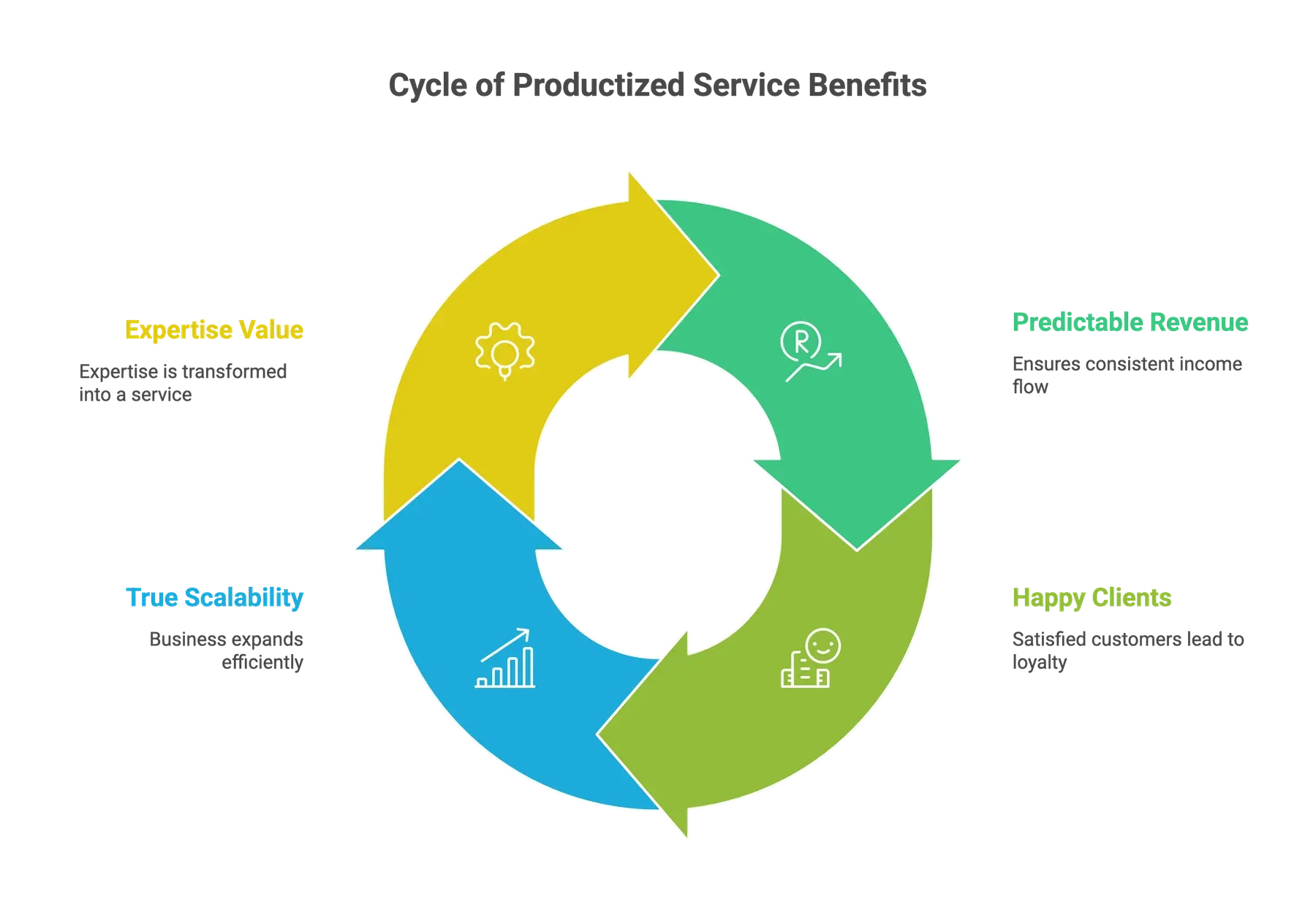
Productizing Your Consulting Services
For years I sold my time and rewrote every proposal from scratch. The day I put a price on one repeatable result, my consulting practice finally started to behave like a business.
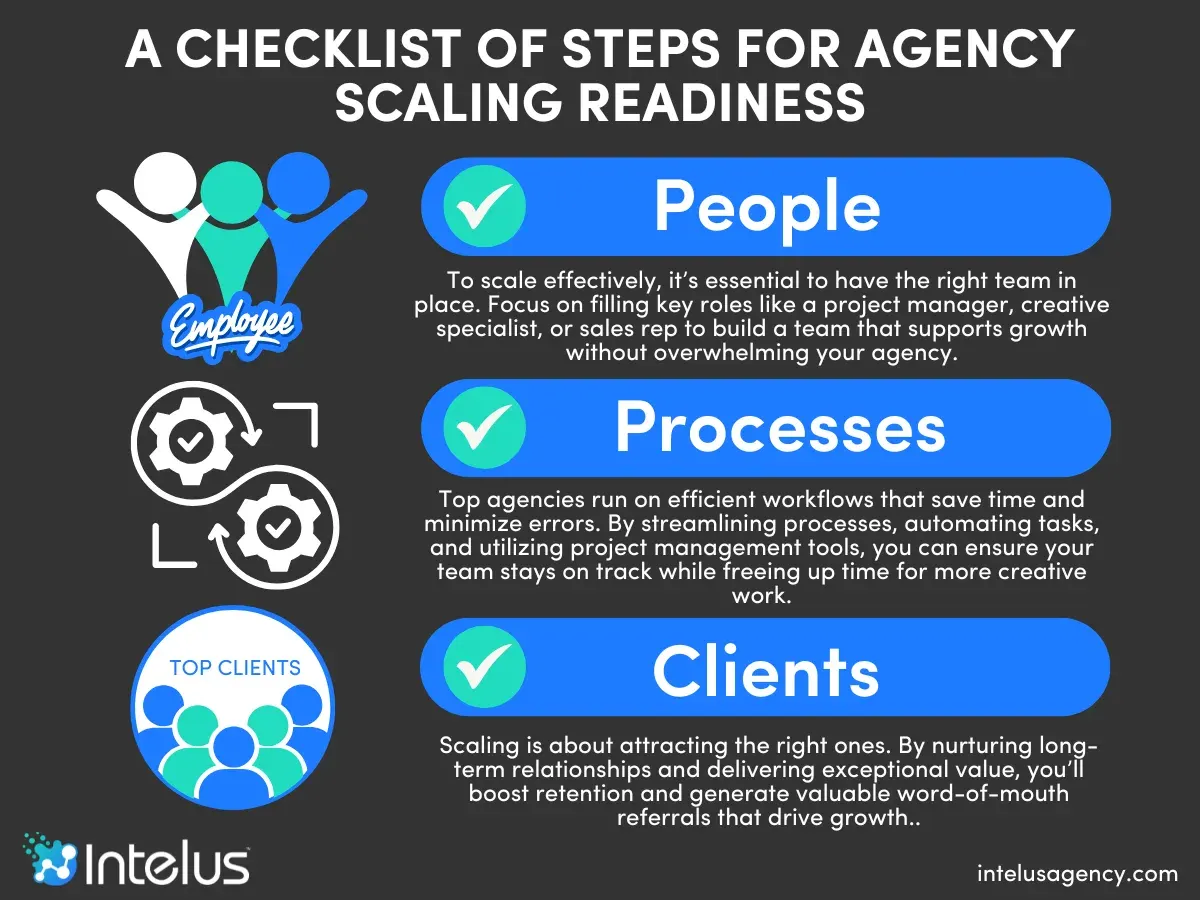
Scaling from Solo to Agency
Everyone treats growing an agency as the obvious next step. It is not a step at all - it is a different business, with a different life attached. Here is how to scale on purpose, or to decide, just as deliberately, not to.
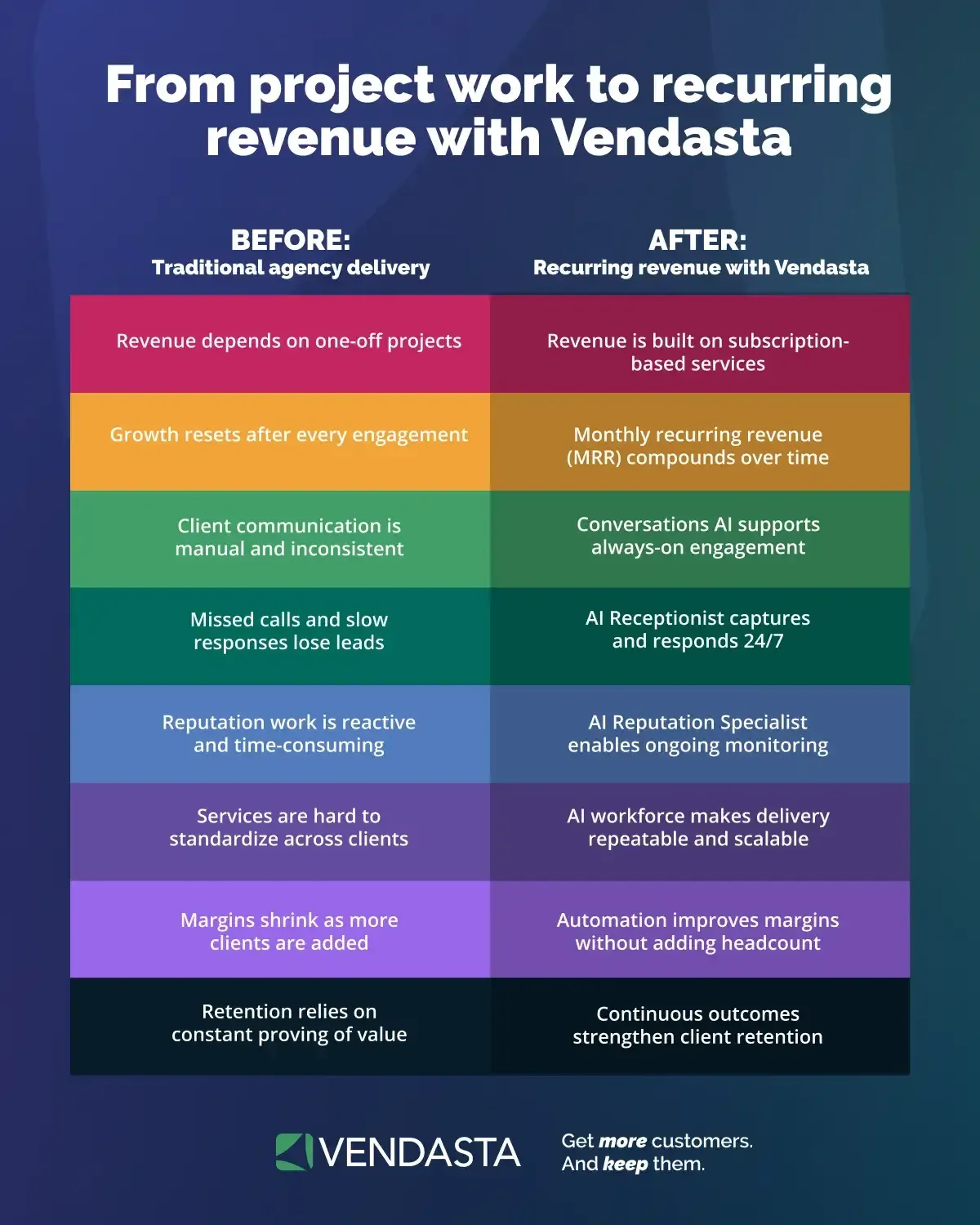
Building Recurring Revenue (Retainers)
The most stressful part of consulting is not the work. It is wondering where next month's work comes from. Retainers fix that - but only if you design them as an ongoing promise, not a discounted project.
Comments
No comments yet. Start the conversation.