Trust Thyself: Emerson's "Self-Reliance" and the Courage to Be Original
In one breath
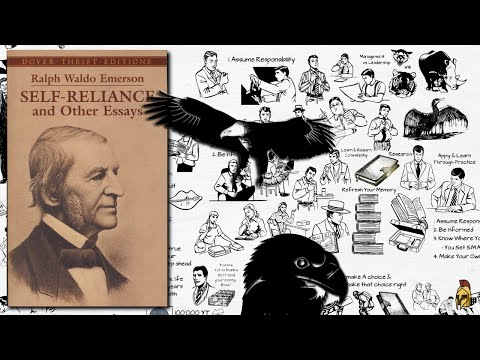
Ralph Waldo Emerson's essay Self-Reliance urges one message: trust yourself. The conviction you seek from tradition and the crowd is already within you; conformity betrays your genius; a foolish consistency is the hobgoblin of little minds; and true self-reliance draws on something deeper than ego.
On this page
Ralph Waldo Emerson’s essay Self-Reliance is one of the founding documents of the American spirit, and reading it feels like being shaken awake by a brilliant, slightly overwhelming friend. Emerson writes in bursts of aphorism, hurling out memorable lines faster than you can absorb them, all in service of a single, electric message: trust yourself. Stop looking to others, to tradition, to the crowd, for the truth of who you are and what you should do. The genius and the conviction you are waiting to receive from outside are already within you, if only you had the courage to listen to them.
Here is what Self-Reliance taught me about trusting my own mind, about the cost of conformity, and about the famous line on consistency that has been misunderstood for over a century.
Key takeaways
- “Trust thyself”: the conviction you seek outside is already within you.
- Conformity is a kind of self-betrayal, trading your genius for the crowd’s approval.
- “A foolish consistency is the hobgoblin of little minds”: you may change and contradict yourself.
- Imitation is suicide; envy is ignorance, since no one can be you better than you.
- True self-reliance is grounded in something deeper than ego, a universal source within.
The voice within
Emerson’s core conviction is almost mystical: that there is a deep source of truth and power within each person, and that most of us spend our lives ignoring it in favour of borrowed opinions. To believe your own thought, he says, to believe that what is true for you in your private heart is true for all men, that is genius. We dismiss our own flashes of insight precisely because they are ours, only to admire the same ideas later when a famous person says them. Emerson urges the opposite trust: to take seriously the thoughts that rise up in us, to give them voice, to stop outsourcing our convictions to authorities. I find this both exhilarating and a little frightening, which is exactly how he means it.
The pressure to conform
Against this voice within stands the constant pressure of society to make us like everyone else. Society everywhere, he writes, is in conspiracy against the manhood of every one of its members. The virtue most in demand is conformity, and the price of belonging is too often the surrender of our own judgment. Emerson is unsparing about how this self-betrayal works, how we trim our opinions, soften our convictions, and shrink ourselves to fit the expectations of others, and how we lose our own power in the process. Whoso would be a man, he declares, must be a nonconformist. He does not mean mere rebellion for its own sake. He means the harder work of remaining true to your own deepest sense of things even when the crowd pulls the other way.
The freedom to contradict yourself
The most famous, and most misquoted, line in the essay is this: a foolish consistency is the hobgoblin of little minds. People often drop the crucial word “foolish” and use the line to excuse mere flakiness. Emerson means something deeper. He is saying that we should not be imprisoned by our past statements and positions, refusing to grow because we once thought differently. If you are wiser today than yesterday, say so, even if it contradicts what you said before. To insist on consistency with a former self is to let a dead version of you govern the living one. Speak what you think now, he urges, and tomorrow speak what you think tomorrow. There is real liberation in this permission to keep changing.
What I’m taking with me
Emerson can be intoxicating and, taken too far, his radical individualism has real dangers; not every inner voice deserves to be trusted. But read with care, Self-Reliance is a tonic. What I am taking from it is the courage to take my own thoughts seriously, the warning against conforming myself out of existence, and the freedom to grow and contradict my former self without shame. Beneath the bravado, Emerson’s deepest point is humble: that each of us has been given a particular life and a particular voice, and that to imitate someone else is to throw away the one thing only we can offer.
Frequently asked questions
What is the main idea of Emerson’s Self-Reliance?
That we should trust our own thoughts, intuitions, and judgment rather than conforming to society, tradition, or others’ opinions, because the truth and power we seek are already within us.
What does “a foolish consistency is the hobgoblin of little minds” mean?
That we should not be trapped by our past opinions out of a need to seem consistent. If we have grown wiser, we are free to change our minds and contradict our former selves.
Is Emerson encouraging pure selfishness?
Not exactly. His self-reliance is rooted in a deeper, almost spiritual source within the person, not mere ego. Still, readers should balance its radical individualism with responsibility to others.
References & further reading
- Emerson, Ralph Waldo. “Self-Reliance,” in Essays: First Series. 1841.
- Richardson, Robert D. Emerson: The Mind on Fire. University of California Press, 1995.
- Porte, Joel (ed.). Emerson in His Journals. Harvard University Press, 1982.
Watch: others on this book

Read along with me
Book notes, philosophy and the ideas that shape how we build. New essays every month, no spam.
Related reading notes
Living Deliberately: What Thoreau's "Walden" Taught Me About Simplicity
What Thoreau's Walden teaches about simplicity: the true cost of things, quiet desperation, living deliberately and learning from nature.
The Ethics of Authenticity: Charles Taylor on Being True to Yourself
Charles Taylor's The Ethics of Authenticity: the noble roots of being true to yourself, its debased forms and the horizons of significance it needs.
The Architecture of Love: On Sacrifice, Silence, and the Courage to Stay Human
There is a house that exists in no city, appears on no map, and requires no architect.
Comments
No comments yet. Start the conversation.