Thinking Without Thinking: Gladwell's "Blink"
In one breath
Malcolm Gladwell's Blink explores split-second judgments. Through thin-slicing, the mind can reach accurate conclusions from little information, sometimes better than long analysis; but snap judgments can also be warped by bias. Expertise sharpens intuition, and the underlying science is more nuanced than the stories.
On this page
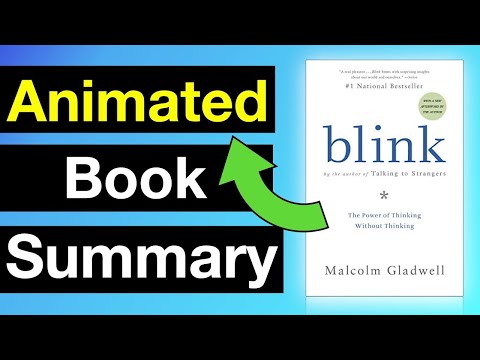
Malcolm Gladwell’s Blink is about the power, and the perils, of split-second decisions, the judgments we make in the blink of an eye, without conscious deliberation. We tend to assume that good decisions require careful, lengthy analysis, and that snap judgments are inferior. Gladwell complicates this. Sometimes, he argues, our rapid, intuitive, unconscious judgments are astonishingly accurate, even superior to slow, deliberate analysis; and sometimes they lead us catastrophically astray. The book explores this “adaptive unconscious,” the part of the mind that reaches conclusions in an instant, and asks when we should trust it and when we should not. As with all of Gladwell, I read it as a stimulating set of stories and a provocation rather than the final scientific word.
Here is what Blink taught me about rapid cognition, about the power and the danger of snap judgments, and about reading Gladwell critically.
Key takeaways
- “Thin-slicing”: the mind can reach accurate judgments from very little information, very fast.
- Snap judgments can be brilliant, sometimes better than long analysis.
- But they can also be disastrous, warped by bias and prejudice.
- Expertise sharpens intuition; experts “know” without knowing how.
- Read critically: compelling stories, but the science is more nuanced.
The power of rapid cognition
Gladwell’s central and genuinely interesting idea is “thin-slicing”: the ability of our unconscious mind to find patterns and reach accurate conclusions based on very narrow slices of experience, in an instant. He opens with the striking case of art experts who took one look at a supposedly ancient statue and instantly sensed, before any scientific analysis, that something was wrong, that it was a fake, a judgment later vindicated. He gives many such examples: the marriage researcher who can predict, from a few minutes of watching a couple, whether they will divorce; the experienced firefighter whose sudden gut feeling to evacuate saves lives. In these cases, rapid, intuitive cognition, drawing on deep experience and unconscious pattern-recognition, proves remarkably powerful, often outperforming slow, deliberate analysis. The adaptive unconscious, Gladwell argues, is constantly making sophisticated judgments below the level of awareness, and these snap judgments deserve far more respect than we usually give them.
The danger of the blink
But Gladwell is careful, and this is what saves the book from being mere celebration of gut instinct: rapid cognition can also lead us badly astray. The same unconscious that produces brilliant snap judgments can also produce snap judgments warped by bias, prejudice, and superficial impressions. He explores how our instant reactions can be distorted by stereotypes, by appearances, by irrelevant factors we are not even aware of, leading to discrimination and serious error. His most sobering example is a tragic police shooting, where snap judgments under stress, distorted by fear and bias, led to the killing of an innocent man. The lesson is balanced and important: our rapid intuitions are sometimes our wisest guide and sometimes our most dangerous, and the difficult task is learning to tell which is which, and to guard against the moments when the blink betrays us. Intuition is not infallible; it can be educated, but it can also be corrupted.
Reading Gladwell critically
As with all of Gladwell’s books, I find Blink thought-provoking and best read with a critical eye. Gladwell is a superb storyteller, and his examples are vivid and memorable. But the very persuasiveness of his stories can make a complex, nuanced area of psychology feel tidier and more settled than it is. The science of intuition and rapid cognition is real and fascinating, but it is also contested and full of caveats, and Gladwell, in selecting his most compelling cases, can give an impression of clarity that the underlying research does not fully support. So I take from Blink its genuine and valuable core insight, that fast, unconscious judgment is powerful and deserves respect, but also fallible and dangerous, while holding its tidier conclusions loosely. Gladwell is, as ever, a generator of intriguing ways of seeing rather than a final authority, and read in that spirit, he is well worth the time.
What I’m taking with me
Blink gave me a richer and more balanced appreciation of my own snap judgments. What I am taking from Gladwell is the concept of thin-slicing and the recognition that rapid, intuitive cognition can be astonishingly powerful, sometimes better than slow analysis; the crucial counterbalance that the same fast judgment can be disastrously distorted by bias and superficiality; and a critical appreciation of his storytelling. The deepest practical lesson is one of discernment: to respect my intuitions, especially where they are educated by deep experience, while remaining vigilant about the moments when the blink is driven not by wisdom but by prejudice, fear, or surface impression. The art is knowing when to trust the gut, and when to slow down and think.
Frequently asked questions
What is Blink about?
It is Malcolm Gladwell’s book about rapid, unconscious decision-making, the judgments we make in the blink of an eye, exploring when these snap judgments are remarkably accurate and when they lead us dangerously astray.
What is “thin-slicing”?
Gladwell’s term for the mind’s ability to find patterns and reach accurate conclusions from very small amounts of information, very quickly, often unconsciously and based on deep experience.
Are snap judgments reliable?
Sometimes brilliantly so, especially when informed by expertise; but they can also be distorted by bias, stereotype, and superficial impressions. Gladwell’s balanced point is that we must learn when to trust intuition and when to be wary of it.
References & further reading
- Gladwell, Malcolm. Blink: The Power of Thinking Without Thinking. Little, Brown, 2005.
- Gladwell, Malcolm. The Tipping Point. Little, Brown, 2000.
- Gigerenzer, Gerd. Gut Feelings: The Intelligence of the Unconscious. Viking, 2007.
Watch: others on this book

Read along with me
Book notes, philosophy and the ideas that shape how we build. New essays every month, no spam.
Related reading notes
Two Minds in One Head: Kahneman's "Thinking, Fast and Slow"
Daniel Kahneman's Thinking, Fast and Slow: System 1 and System 2, common cognitive biases, loss aversion and the humility they bring.

Why We're Bad at Predicting Our Own Joy: Gilbert's "Stumbling on Happiness"
Daniel Gilbert's Stumbling on Happiness is not, despite its title, a how-to guide for becoming happy.

The Story Behind Success: Malcolm Gladwell's "Outliers"
Malcolm Gladwell's Outliers: the hidden advantages behind success, timing and culture, the 10,000-hour rule and how far to trust it.
Comments
No comments yet. Start the conversation.