The Big Questions in Small Words: Thomas Nagel's "What Does It All Mean?"
In one breath
In about a hundred pages and without jargon, Thomas Nagel's What Does It All Mean? lays out philosophy's great questions: knowledge, mind and body, free will, meaning, right and wrong, justice, death and the meaning of life. He poses them honestly, without easy answers, inviting readers to think for themselves.
On this page
Thomas Nagel’s What Does It All Mean? is a short, marvellous book, subtitled “A Very Short Introduction to Philosophy,” in which one of the finest philosophers of our time sets out the great philosophical questions in the plainest possible language, without jargon, without name-dropping, without assuming any background at all. In barely a hundred pages, Nagel takes up the deepest problems, the nature of knowledge, the mind-body problem, free will, the meaning of words, the basis of right and wrong, justice, death, and the meaning of life, and lays them out so clearly and honestly that a complete beginner can grasp what is genuinely puzzling about each. It is a model of how to think and write about philosophy, and proof that the deepest questions can be approached directly, with curiosity and clarity, by anyone willing to wonder.
Here is what What Does It All Mean? taught me about the great questions, about the value of honest wonder, and about philosophy as something everyone can do.
Key takeaways
- The great questions can be stated in plain, jargon-free language.
- Philosophy begins in wonder, in puzzling over the ordinary.
- Nagel poses problems honestly, without pretending to easy solutions.
- Thinking for yourself matters more than memorizing positions.
- Anyone can do philosophy who is willing to ask and wonder.
The great questions in plain words
What makes this little book so valuable is Nagel’s insistence on approaching philosophy directly, through the questions themselves, rather than through the history of who said what. Most introductions to philosophy survey the great philosophers and their doctrines; Nagel does something different and, I think, better for a beginner. He takes each of the central philosophical problems and simply asks it, in ordinary language, showing what is genuinely puzzling about it. How do you know anything exists outside your own mind? What is the relationship between your conscious experiences and your brain? Are your choices ever really free, or are they determined by prior causes? What makes an action right or wrong? Does anything we do ultimately matter? Nagel strips away the technical vocabulary and the scholarly apparatus and gets straight to the live, puzzling heart of each question, so that the reader feels the genuine perplexity for themselves. This is philosophy as it should first be encountered: not as a body of doctrine to be learned, but as a set of real and pressing puzzles to be wondered at.
The value of honest wonder
Throughout, Nagel models a particular intellectual virtue that I prize: honest wonder, the willingness to be genuinely puzzled and to admit when the puzzles have no easy answer. He does not pretend to solve the great problems, nor does he push his own views; instead, he lays out the difficulties on each question fairly, showing why it is hard, what can be said on various sides, and where the genuine perplexity lies, often ending not with an answer but with the honest acknowledgment that the question remains deeply open. This honesty is itself instructive. It teaches that philosophy is not about having clever opinions or memorising the right answers, but about thinking carefully and truthfully about hard questions, and about the courage to sit with uncertainty rather than reaching for false closure. Nagel shows that to wonder, to be struck by the strangeness and difficulty of things we normally take for granted, is the beginning of philosophy and a deeply valuable habit of mind, one that keeps us thinking, questioning, and alive to the mysteries that surround our ordinary lives.
Philosophy as something everyone can do
The deepest message of this small book, embodied in its very form, is that philosophy is not the exclusive property of experts and specialists but something anyone can and should do. By posing the great questions so simply and directly, Nagel demonstrates that you do not need years of training or a special vocabulary to engage with the deepest matters; you need only curiosity, honesty, and the willingness to think. These questions, after all, are not artificial academic puzzles but the natural questions of any reflective person: questions a thoughtful child might ask, and that we never fully outgrow. Nagel returns philosophy to its rightful owners, all of us, and invites every reader to take up the questions and think them through for themselves. This democratic spirit is one I deeply share. The examined life, the habit of wondering about knowledge, mind, freedom, justice, and meaning, is open to everyone, and Nagel’s book is the perfect doorway in: a small, clear, honest invitation to begin thinking, on one’s own, about what it all means.
What I’m taking with me
What Does It All Mean? is a small masterpiece of clarity, and I would put it into the hands of anyone curious about philosophy. What I am taking from Nagel is his demonstration that the great questions can be posed in plain, honest words, stripped of jargon and pretension; his model of honest wonder, of stating problems truthfully without forcing false answers; and his liberating insistence that philosophy belongs to everyone, that anyone willing to wonder and think can do it. The book leaves me with a renewed sense of the value of the questions themselves, and of the simple, profound habit of stepping back from the rush of life to ask, with a beginner’s clear-eyed wonder, what it all really means.
Frequently asked questions
What is What Does It All Mean? about?
It is Thomas Nagel’s very short introduction to philosophy, presenting the great philosophical questions, knowledge, mind, free will, ethics, justice, death, and meaning, in plain, jargon-free language accessible to complete beginners.
Is What Does It All Mean? good for beginners?
Yes. It is widely regarded as one of the best introductions to philosophy precisely because it approaches the questions directly and simply, without technical vocabulary or assuming any background, inviting readers to think for themselves.
Does Nagel answer the big questions in the book?
Mostly he does not. Nagel honestly lays out why each question is hard and what can be said on various sides, often leaving them open, modelling careful, truthful thinking rather than providing tidy answers.
References & further reading
- Nagel, Thomas. What Does It All Mean? A Very Short Introduction to Philosophy. Oxford University Press, 1987.
- Nagel, Thomas. Mortal Questions. Cambridge University Press, 1979.
- Russell, Bertrand. The Problems of Philosophy. 1912.
Watch: others on this book

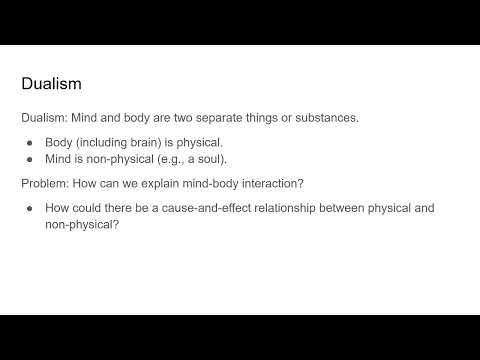
Read along with me
Book notes, philosophy and the ideas that shape how we build. New essays every month, no spam.
Related reading notes
What Is It Like to Be a Bat? Thomas Nagel's "Mortal Questions"
Thomas Nagel's Mortal Questions: what it is like to be a bat, the mystery of consciousness, moral luck and the absurd, faced without false comfort.
I Think, Therefore I Am: Descartes and the Search for Certainty
With Descartes, philosophy turns a corner, and you can feel it happening inside his Meditations on First Philosophy.
The Pleasures of Philosophy: Reflections on Will Durant's "The Story of Philosophy"
Will Durant's The Story of Philosophy: great thinkers told through their lives, why it suits beginners and why philosophy can be a pleasure.
Comments
No comments yet. Start the conversation.