Solidarity in the Time of Plague: Camus' "The Plague"
In one breath
The Plague follows the Algerian city of Oran sealed off by an epidemic, often read as a symbol of the Nazi occupation and of absurd suffering. Dr. Rieux embodies quiet heroism, simply doing his job with common decency, and Camus answers the absurd with solidarity: fighting suffering together.
On this page
Albert Camus’s The Plague tells the story of an epidemic that descends on the Algerian city of Oran, sealing it off from the world and forcing its inhabitants to confront suffering, death, and separation. On one level it is a gripping, realistic account of a city under quarantine. On another, it is a profound philosophical and moral parable, and many have read the plague as a symbol of evil in all its forms, of the Nazi occupation Camus lived through, of the absurd suffering that is simply part of the human condition. Where The Myth of Sisyphus faced the absurd alone, The Plague asks a deeper question: how should we live, and act, together, in a world that contains unearned suffering?
Here is what The Plague taught me about facing absurd suffering, about the quiet heroism of doing one’s job, and about human solidarity as Camus’s answer to the absurd.
Key takeaways
- The plague is both a literal epidemic and a symbol of evil and absurd suffering.
- Dr. Rieux embodies a quiet, persistent heroism: simply doing his job.
- Heroism is not grand but a matter of “common decency.”
- Solidarity is Camus’ answer to the absurd: we fight suffering together.
- We must act against suffering even without metaphysical guarantees.
The plague as the human condition
The genius of Camus’s novel is how the plague works on multiple levels at once. It is a vividly realistic epidemic, with all the fear, denial, bureaucracy, and grief such a disaster brings. But it is also unmistakably a symbol. The plague arrives without warning, strikes without justice, and kills the innocent and the guilty alike; it is the absurd made visible, suffering that has no meaning and serves no purpose. Camus, who had lived through the Nazi occupation of France, surely had political tyranny in mind as well. The plague is whatever descends on human life to bring senseless suffering and death. And the great question the novel poses is not “why does this happen?”, which has no answer, but “what do we do now that it has?”
The heroism of doing your job
Camus’s answer is embodied above all in Dr. Bernard Rieux, the narrator, a physician who simply keeps working through the epidemic, treating the sick, fighting the disease, day after exhausting day, with no illusion that he will win and no expectation of reward or glory. When someone calls his work heroic, Rieux rejects the word. He is just doing his job, acting from what he calls “common decency.” This is Camus’s profound redefinition of heroism. It is not the dramatic gesture of the exceptional individual but the steady, unglamorous persistence of ordinary people refusing to give in, doing what must be done because it is right and because someone must do it. I found this deeply moving and deeply sane. The real heroes are not the loud ones; they are the ones who keep showing up.
Solidarity against the absurd
The deepest theme of The Plague is solidarity, and it marks an evolution in Camus’s thought. In The Myth of Sisyphus, the individual confronts the absurd alone. In The Plague, Camus discovers that the response to absurd suffering is collective: we fight it together. The characters who matter, Rieux, the volunteer Tarrou, the others who join the sanitary squads, are bound by a shared refusal to accept suffering passively and a shared commitment to relieve it. Camus is not religious; he offers no promise that the struggle will be rewarded or that the universe cares. He simply insists that, in the face of meaningless suffering, the human response is to stand together and resist, to choose solidarity and compassion without any metaphysical guarantee. This, for Camus, is how we wrest dignity and meaning from an absurd world: not alone, but together.
What I’m taking with me
The Plague is, I think, Camus’s wisest book, the place where his philosophy of the absurd matures into an ethic of solidarity. What I am taking from it is its clear-eyed acceptance that suffering comes without justice or meaning; its beautiful redefinition of heroism as ordinary, persistent common decency, the courage of simply doing one’s job; and its central conviction that the human answer to absurd suffering is to stand together and fight it, with compassion and without illusions. In any time of crisis, Camus’s quiet question returns to me: not why is this happening, but what, in decency, must I now do, and who will I stand with while I do it?
Frequently asked questions
What is The Plague by Camus about?
It depicts an epidemic that quarantines the city of Oran, both as a realistic story and as a parable of evil and absurd suffering. It explores how people respond, and argues for solidarity and persistent decency.
What does the plague symbolize?
Absurd, meaningless suffering and evil in many forms, often read as the Nazi occupation Camus lived through, or simply the unearned suffering that is part of the human condition.
What is Camus’ idea of heroism in The Plague?
Not grand or dramatic, but the quiet, persistent “common decency” of people like Dr. Rieux who simply keep doing their jobs and fighting suffering together, without expecting reward.
References & further reading
- Camus, Albert. The Plague. (1947; translated by Stuart Gilbert, Hamish Hamilton, 1948.)
- Cruickshank, John. Albert Camus and the Literature of Revolt. Oxford University Press, 1959.
- Todd, Olivier. Albert Camus: A Life. Knopf, 1997.
Watch: others on this book
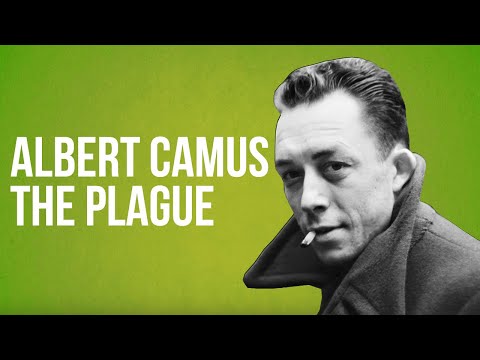

Read along with me
Book notes, philosophy and the ideas that shape how we build. New essays every month, no spam.
Related reading notes
Embracing Absurdity: Reflections on Albert Camus' "The Stranger"
Camus' The Stranger and the absurd: Meursault's indifference, authenticity, alienation and what the novel teaches about finding meaning.
The Judge-Penitent: Guilt and Hypocrisy in Camus' "The Fall"
Camus' The Fall explained: Clamence the judge-penitent, guilt and hypocrisy, universal complicity and why the novel is a trap for the reader.
I Rebel, Therefore We Exist: Camus' "The Rebel"
Albert Camus's The Rebel is his great philosophical essay on revolt, and it is a far more political and historical work than The Myth of Sisyphus.
Comments
No comments yet. Start the conversation.