Desire, Faith, and the Mind: A Critical Look at "Think and Grow Rich"
In one breath
Think and Grow Rich (1937) helped launch the self-help industry. Read critically, it holds real psychology: definite goals focus effort, persistence outlasts talent and the people around you shape you. But Hill blurs belief into magic; read it as psychology, not metaphysics.
On this page
Napoleon Hill’s Think and Grow Rich, published in 1937 in the depths of the Great Depression, is one of the founding documents of the entire self-help industry. Hill claimed to have spent decades studying hundreds of wealthy and successful people to distil the secret of their achievement. I read it with a divided mind, and I think that is the only honest way to read it. Parts of it are shrewd psychology dressed up in the language of money; other parts are frankly magical thinking. Sorting the gold from the hype turned out to be the most useful exercise the book offered.
Here is what Think and Grow Rich taught me, read critically, about the power of a clear goal, about persistence, and about the dangerous places where its philosophy overreaches.
Key takeaways
- A burning, definite goal focuses energy in a way that vague wishing never does.
- Persistence outlasts talent; most people quit just short of success.
- The company you keep shapes you, Hill’s idea of the “mastermind” group.
- Belief affects behaviour, but it does not rewrite physical reality, and Hill blurs this line.
- Read it as psychology, not metaphysics, and keep your critical guard up.
The power of a definite aim
The most defensible idea in the book is Hill’s insistence on a “definite chief aim,” a single, clear, specific goal that you fix in your mind and organise your life around. There is real psychology here. A vague wish to “be successful” gives the mind nothing to act on, while a concrete, well-defined goal directs attention, shapes decisions, and reveals opportunities you would otherwise miss. Hill dramatises this with rituals of repetition and visualisation that sound mystical, but underneath is a sound observation: we tend to move toward what we keep clearly in view. Clarity of purpose really does concentrate effort, and most people never give themselves that clarity.
Persistence, the unglamorous virtue
Hill returns again and again to persistence, and on this I think he is simply right. He collects story after story of people who failed repeatedly and succeeded only because they refused to stop, often, he claims, quitting just one step before they would have broken through. Whatever the accuracy of the anecdotes, the principle holds. Talent and inspiration are common; the willingness to keep going through discouragement, tedium, and repeated failure is rare, and it is usually what separates those who finish from those who do not. This is the least exciting lesson in the book and probably the most valuable.
Where the book goes wrong
I cannot recommend Think and Grow Rich without a clear warning, because its central promise is also its central flaw. Hill slides constantly from a reasonable claim, that belief and attitude shape our behaviour, to an unreasonable one, that thought alone attracts wealth through some quasi-magical law of the universe. This is not true, and believing it can be harmful. It encourages people to mistake visualisation for work, and worse, it implies that those who fail or remain poor simply did not believe hard enough, ignoring the brutal role of circumstance, luck, and injustice. The Depression-era readers Hill addressed were not poor for lack of positive thinking. Read the psychology; reject the magic.
What I’m taking with me
Think and Grow Rich is best treated as a mixed inheritance, to be sorted carefully rather than swallowed whole. What I am keeping is the practical core: set a clear and specific goal, surround yourself with people who sharpen you, and persist long past the point where most give up. What I am leaving behind is the seductive fantasy that thought alone bends reality to our wishes. The mind is a powerful instrument for directing effort. It is not a substitute for the effort, and pretending otherwise is the oldest trap in the genre Hill helped invent.
Frequently asked questions
What is the main idea of Think and Grow Rich?
That success begins with a clear, burning desire and a definite goal, sustained by belief, persistence, and supportive relationships. Hill argues that disciplined thinking precedes achievement.
Does Think and Grow Rich actually work?
Its practical advice on goal-setting, persistence, and relationships is genuinely useful. Its claim that thought alone magically attracts wealth is not supported and should be read with strong skepticism.
What is a “mastermind” group?
Hill’s term for a circle of supportive, knowledgeable people who help one another succeed. The underlying insight, that our environment and company shape our results, is sound.
References & further reading
- Hill, Napoleon. Think and Grow Rich. The Ralston Society, 1937.
- Hill, Napoleon. The Law of Success. 1928.
Read along with me
Book notes, philosophy and the ideas that shape how we build. New essays every month, no spam.
Related reading notes

Escaping the Tyranny of Time: A Critical Reading of "The Power of Now"
A critical reading of Eckhart Tolle's The Power of Now: the useful core about presence and thought, and where the grand claims go too far.

You Are What You Think: Lessons from James Allen's "As a Man Thinketh"
James Allen's As a Man Thinketh is tiny, a little essay you can read in under an hour, written in 1903 in plain, almost biblical prose.
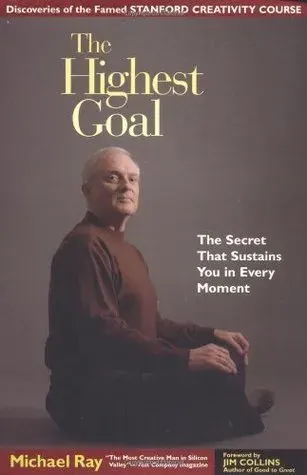
Living with Purpose: Lessons from The Highest Goal by Michael Ray
In a world focused on goals, titles, and achievements, it’s easy to chase one thing after another without ever stopping to ask the bigger question: Why?
Comments
No comments yet. Start the conversation.