"Brooks Was Here": The Existential Crisis Hidden Inside The Shawshank Redemption
In one breath
Brooks, released after 50 years in The Shawshank Redemption, finds freedom unbearable. His story opens an existential question: what is the point of being present if we cannot feel it? Sartre, Camus, Nietzsche and Kierkegaard each offer a different answer to freedom without meaning.
On this page
“Sometimes, all you need to do is be present—even if your presence doesn’t mean anything.”
These were the words of a schoolteacher taking attendance, trying to remind a student that simply showing up has value. But the student, Zein, wasn’t convinced.
“What’s the point of being present,” he asked, “if I don’t feel it?”
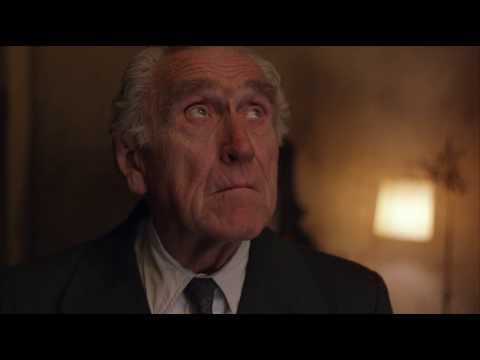
That question may sound dramatic in a classroom, but it echoes something deeper—something disturbingly real. It’s the same question that haunted Brooks, the old man in The Shawshank Redemption who, after 50 years in prison, was finally set free.
Freedom: A Blessing or a Burden?
In the 1994 film, The Shawshank Redemption, Andy Dufresne digs his way to freedom over 19 years. It’s a story of hope and resilience. But Brooks’ story—the quiet tragedy running in parallel—is arguably the most human part of the film.
Brooks wasn’t trying to escape. He was released. After 50 years in Shawshank, he was finally free. And it destroyed him.
Out in the real world, everything had changed. Cars were faster. Streets were louder. People moved on. The world he once knew was gone. He was overwhelmed by freedom—not because he didn’t appreciate it, but because he didn’t know how to handle it.
“The world went and got itself in a big damn hurry.”
Even the simple job of bagging groceries felt like a mountain to climb. And then, one day, he ended it all. He carved four words into the wood above his bed:
“Brooks was here.”
The Real Prison: Existential Anxiety
What killed Brooks wasn’t the outside world. It wasn’t fear of crime or loneliness.
It was existential anxiety—a state in which a person questions the very meaning of their existence. Not because of trauma, but because they suddenly see the world for what it is: chaotic, vast, and often, utterly meaningless.
Brooks had spent half a century being told when to eat, sleep, and work. In prison, he mattered. Outside, he was just a name. And that’s where existentialist philosophers come in.
Sartre: Existence Before Essence
“Existence precedes essence.” – Jean-Paul Sartre
Sartre believed we are not born with a preset meaning or purpose. We exist first—and then define ourselves through our choices and actions.
For Brooks, that freedom was unbearable. He didn’t know how to define himself without someone else doing it for him.
Camus: Imagine Sisyphus Happy
Albert Camus saw life as absurd. In The Myth of Sisyphus, he compares human life to a man endlessly pushing a boulder uphill, only for it to roll down again.
But Camus offers a powerful idea:
“One must imagine Sisyphus happy.”
To keep going despite the absurdity is an act of rebellion—and of courage. That’s what Brooks couldn’t manage to do.
Nietzsche: God Is Dead
Friedrich Nietzsche declared:
“God is dead. And we have killed him.”
This wasn’t atheism—it was a warning. Without belief systems and absolute truths, the world loses its structure. Like Brooks, many of us struggle when the old systems vanish and nothing replaces them.
Kierkegaard: The Leap of Faith
Unlike the others, Søren Kierkegaard believed the answer was not in reason or rebellion, but in faith.
When the world makes no sense, we can still choose to believe. Faith, to Kierkegaard, was not blind—it was an act of courage.
Brooks Was All of Us
At some point, we all face a Brooks moment—when the life we knew disappears, and we must start over. What do we do then?
- Do we collapse under the weight of freedom?
- Do we redefine our meaning?
- Do we make the leap of faith?
Perhaps the question isn’t: “What’s the meaning of life?”
But rather: “What meaning will I give my life?”
In the End
Existentialist philosophy doesn’t give us answers—it gives us better questions.
The next time you feel lost or anxious, remember:
- Sartre: You are free—create your essence.
- Camus: Find joy in the struggle.
- Nietzsche: Be your own source of values.
- Kierkegaard: Take a leap—believe in something.
And maybe, when you write your name one day, it won’t just say:
“I was here.”
But instead:
“I lived.”
If this post made you think, share it with someone who’s ever asked: “Why am I here?”
Key takeaways 5
- Brooks shows that freedom can feel like a burden rather than a gift.
- The real prison is often existential anxiety, not walls.
- Sartre: existence comes before essence, so we must create our own meaning.
- Camus: we must imagine Sisyphus happy, finding meaning in the struggle itself.
- Nietzsche and Kierkegaard offer self-creation and the leap of faith as other answers.
Watch: others on this book
Frequently asked questions
Why did Brooks struggle after leaving prison in The Shawshank Redemption?
After 50 years inside, Brooks had become institutionalized. Outside, he had no role, routine or sense of purpose, and the freedom he received felt empty and frightening.
What does Brooks represent existentially?
He represents the anxiety of facing freedom without meaning, the experience existentialist philosophers describe when the structures that defined us disappear.
How do existentialist philosophers answer the crisis Brooks faced?
Sartre says we must create our own meaning, Camus suggests embracing the absurd, Nietzsche calls for creating new values and Kierkegaard proposes a leap of faith.
Read along with me
Book notes, philosophy and the ideas that shape how we build. New essays every month, no spam.
Related reading notes
Embracing Absurdity: Reflections on Albert Camus' "The Stranger"
Camus' The Stranger and the absurd: Meursault's indifference, authenticity, alienation and what the novel teaches about finding meaning.
Bad Faith and the Look of the Other: Sartre's "Being and Nothingness"
Sartre's Being and Nothingness explained: bad faith, the Look of the Other and why we are condemned to be free, and how these ideas show up every day.
Condemned to Be Free: Sartre's "Existentialism Is a Humanism"
Sartre's Existentialism Is a Humanism explained: existence precedes essence, condemned to be free, bad faith and choosing for all humanity.
Comments
No comments yet. Start the conversation.