A Life Lived From Within: Jung's "Memories, Dreams, Reflections"
In one breath
Memories, Dreams, Reflections is Carl Jung's late-life autobiography, told through his inner life rather than his career: dreams, visions, his confrontation with the unconscious and the long work of individuation. It is the most intimate view we have of the mind behind analytical psychology.
On this page
Memories, Dreams, Reflections is Carl Jung’s autobiography, written near the end of his long life, and it is unlike any conventional life story. Jung says at the outset that he can understand himself only in the light of inner happenings, and so this is the autobiography not of his outward career but of his inner life, his dreams, visions, fantasies, and the long process of his own individuation. The external events, his break with Freud, his travels, his fame, appear only insofar as they bear on this inner journey. It is a strange, profound, sometimes unsettling book, and it gives the most intimate view we have of the mind that gave us the concepts of the collective unconscious, the archetypes, and individuation.
Here is what Memories, Dreams, Reflections taught me about the primacy of the inner life, about the confrontation with the unconscious, and about wholeness as the task of a life.
Key takeaways
- Jung tells the story of his inner life, not his external career.
- The inner world of dreams and visions is as real and important as the outer.
- His “confrontation with the unconscious” was a perilous, formative descent.
- Symbols like the mandala represent the self’s drive toward wholeness.
- The task of life is individuation: becoming a whole, integrated self.
The primacy of the inner life
The most striking thing about Jung’s autobiography is its conviction that the inner life is where the real story of a person lies. Most autobiographies recount achievements, relationships, and events; Jung largely sets these aside to tell us his dreams, his visions, his fantasies, and the meanings he found in them. For Jung, the psyche is not a by-product of the external world but a reality in its own right, as real and consequential as anything outside us. What happens within, the images that rise from the unconscious, the symbols that recur in dreams, the slow inner development of the self, is, in his view, the deepest truth of a life. This is a profound reorientation, and it is the same conviction that drives his whole psychology. To know a person, including yourself, you must attend to the inner world, which most of us ignore.
The confrontation with the unconscious
The most extraordinary and unsettling part of the book is Jung’s account of what he calls his “confrontation with the unconscious,” a period after his painful break with Freud when he deliberately descended into his own depths, allowing the images, voices, and fantasies of the unconscious to rise up and engage him. It was a perilous journey, bordering at times on what might look like psychosis, and Jung is candid about how close to the edge he went. But out of this descent, and his courageous engagement with what he found there, came the raw material of all his later theories: the archetypes, the collective unconscious, the figures that populate the deep psyche. He treated his own inner experience as a kind of laboratory, exploring the unconscious from the inside. It is a remarkable and risky thing to read, the founder of a psychology using himself as the experiment, and it gives his abstract concepts a vivid, lived reality.
Wholeness as the task of a life
Threading through the whole book is Jung’s central idea, individuation: the lifelong process of becoming a whole, integrated self, of bringing together the conscious and unconscious, reconciling the opposites within us, and realising our full and unique personality. He found this drive toward wholeness expressed in symbols, above all the mandala, the circular, balanced design that appears across cultures and that he came to see as an image of the integrated self, the Self at the centre of the psyche. His own life, as he tells it, was one long work of individuation, of slowly becoming who he truly was. This gives the autobiography its underlying shape and meaning: it is the story of a soul’s journey toward wholeness, told from the inside. And it suggests that this is, in the end, the task of every life, not to achieve outward success but to become, fully and authentically, oneself.
What I’m taking with me
Memories, Dreams, Reflections is the most intimate window we have into one of the great explorers of the human psyche. What I am taking from Jung is his conviction that the inner life is where the real story of a person unfolds, and deserves our attention; the courage of his confrontation with the unconscious, treating his own depths as territory to be explored rather than feared; and his vision of individuation, the becoming of a whole self, as the deepest task of a life. Whatever one makes of his more speculative ideas, Jung leaves me convinced that a life examined only on the surface is barely examined at all, and that the journey inward is the one that matters most.
Frequently asked questions
What is Memories, Dreams, Reflections?
It is Carl Jung’s autobiography, focused not on his external career but on his inner life, his dreams, visions, and the development of the ideas, like the collective unconscious and individuation, that shaped his psychology.
What was Jung’s “confrontation with the unconscious”?
A period after his break with Freud when Jung deliberately descended into his own unconscious, engaging its images and fantasies. This perilous inner journey produced the raw material of his later theories.
What does individuation mean?
Jung’s term for the lifelong process of becoming a whole, integrated self, reconciling the conscious and unconscious and realizing one’s full, unique personality. He saw it as the central task of life.
References & further reading
- Jung, Carl G. Memories, Dreams, Reflections. (Recorded and edited by Aniela Jaffé; Pantheon, 1963.)
- Jung, Carl G. Modern Man in Search of a Soul. Kegan Paul, 1933.
- Storr, Anthony. Jung. Fontana, 1973.
Watch: others on this book


Read along with me
Book notes, philosophy and the ideas that shape how we build. New essays every month, no spam.
Related reading notes
The Undiscovered Self: Jung's "Modern Man in Search of a Soul"
Carl Jung's Modern Man in Search of a Soul is a fine entry point into one of the most original minds in the history of psychology.
The Language of the Unconscious: Jung's "Man and His Symbols"
Jung's Man and His Symbols: what symbols really are, how dreams speak for the unconscious, archetypes and why modern life lost touch with symbols.
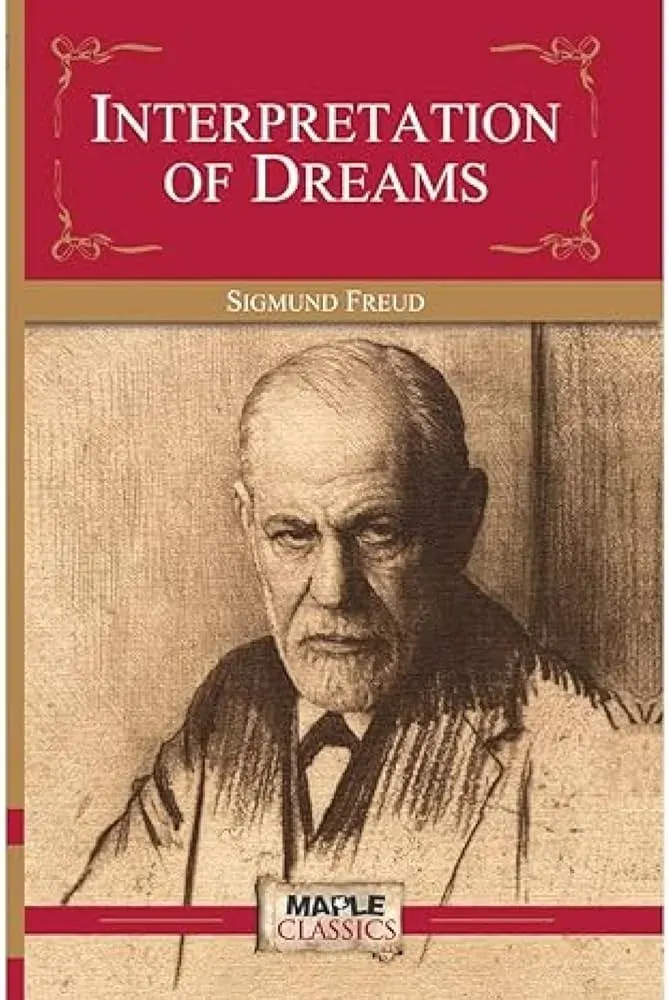
Unlocking the Depths of the Mind: Lessons from Freud's "The Interpretation of Dreams"
Lessons from Freud's The Interpretation of Dreams: the unconscious, dreams as wish fulfillment, symbolism and dream work, and their lasting influence.
Comments
No comments yet. Start the conversation.